Top 5 · Compliance Automation
Top 5 Ways to Automate Compliance Monitoring Without Losing Control
Five practical ways healthcare organisations can automate compliance monitoring while keeping people in control of every judgement call.
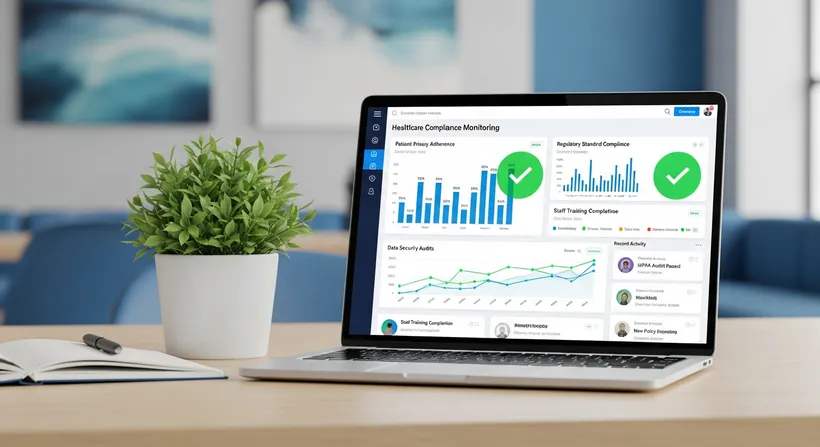
Compliance monitoring is a strong candidate for automation because much of it involves the same checks, repeated on a schedule, against clear rules. Done well, automation strengthens compliance by catching issues faster and more consistently than manual review. Done badly, it creates a false sense of security. Here are five ways to get the balance right.
1. Automate tracking, not judgement
The clearest wins come from automating the tracking of dates, thresholds and status, training expiry dates, policy review dates, DBS renewal dates, rather than automating decisions that require professional judgement. A system that reliably flags “this expires in 14 days” is valuable. A system that decides whether a safeguarding concern warrants escalation is not something to hand over to automation.
2. Build in escalation, not just notification
A monitoring system that quietly logs an issue somewhere nobody checks provides no real protection. Effective automated monitoring includes a clear escalation path, an email, a task assignment, a dashboard flag someone is actually accountable for reviewing, so flagged issues are guaranteed to reach a person who can act on them.
3. Keep a human sign-off step on anything with regulatory weight
Automation can prepare, format and flag, but for anything that will be submitted externally or relied on during an inspection, a designated person should review and approve before it is treated as final. This preserves accountability and gives you a clear answer to “who checked this” that automated processing alone cannot provide.
4. Log what the automation did, not just its output
For automation to hold up under scrutiny, you need a record of what it checked, when, and what it found, not just the final report. This audit trail is what allows you to demonstrate, months later, that monitoring was actually happening consistently rather than assumed to be working.
5. Review and test your automated checks periodically
Rules and thresholds change: a training requirement gets updated, a review period changes, a regulatory reference shifts. An automated check built against last year’s requirements can quietly become wrong and keep confidently reporting compliance regardless. Schedule a periodic review of the rules themselves, not just their output, to make sure the automation is still checking the right thing.
Automated compliance monitoring done properly does not remove human oversight, it makes that oversight faster and more consistent by ensuring the right issues reach the right person at the right time, with a clear record of what was checked and by whom.
This guide is general information for UK healthcare organisations, not legal or regulatory advice specific to your organisation. Always confirm requirements against current CQC, ICO and sector-specific guidance.
Want this applied to your organisation specifically?
The Operations Audit identifies where administration is costing your organisation time and risk, with a prioritised plan. £1,500. 24-hour turnaround.
Book an Operations Audit